
Traditional Healers / Sangoma’s / Inyanga
Traditional healers of Southern Africa are practitioners of traditional African medicine in Southern Africa. They fulfil different social and political roles in the community, including divination, healing physical, emotional and spiritual illnesses, directing birth or death rituals, finding lost cattle, protecting warriors, counteracting witchcraft, and narrating the history, cosmology, and concepts of their tradition. There are two main types of traditional healers within the Nguni, Sotho-Tswana, and Tsonga societies of Southern Africa: the diviner (sangoma), and the herbalist (inyanga). These healers are effectively South African shamans who are highly revered and respected in a society where illness is thought to be caused by witchcraft, pollution (contact with impure objects or occurrences) or through neglect of the ancestors or general health issues. It is estimated that there are as many as 200,000 traditional healers in South Africa compared to 25,000 doctors trained in bio-medical medicine. Traditional healers are consulted by approximately 60% of the South African population, usually in conjunction with modern biomedical services.
For harmony between the living and the dead, vital for a trouble-free life, traditional healers believe that the ancestors must be shown respect through ritual and animal sacrifice. They perform summoning rituals by burning plants like imphepho (Helichrysum petiolare), dancing, chanting, channelling or playing drums. Traditional healers will often give their patients muti—medications made from plant, animal and minerals—imbued with spiritual significance. These muti often have powerful symbolism; for example, lion fat might be prepared for children to promote courage. There are medicines for everything from physical and mental illness, social disharmony and spiritual difficulties to potions for protection, love and luck.
Although sangoma is a Zulu term that is colloquially used to commonly describe all types of Southern African traditional healers, there are differences between practices: an inyanga is concerned mainly with medicines made from plants and animals, while a sangoma relies primarily on divination for healing purposes and might also be considered a type of fortune teller. In modern times, colonialism, urbanisation and transculturation have blurred the distinction between the two and traditional healers tend to practice both arts. Traditional healers can alternate between these roles by diagnosing common illnesses, selling and dispensing remedies for medical complaints, and divining cause and providing solutions to spiritually or socially centred complaints.
Each culture has their own terminology for their traditional healers. Xhosa traditional healers are known as amaxwele (herbalists) or amagqirha (diviners). Ngaka and selaoli are the terms in Northern Sotho and Southern Sotho respectively, while among the Venda they are called mungome. The Tsonga refer to their healers as n’anga or mungoma.
Beliefs and tradition
A sangoma is a practitioner of ngoma, a philosophy based on a belief in ancestral spirits and the practice of traditional African medicine, which is often a mix of medicinal plants and various animal body fats or skin. Sangomas perform a holistic and symbolic form of healing by drawing on the embedded beliefs of the Bantu peoples in South Africa, who believe that ancestors in the afterlife guide and protect the living. Sangomas are called to heal, and through them it is believed that ancestors from the spirit world can give instruction and advice to heal illness, social disharmony and spiritual difficulties. Traditional healers work in a sacred healing hut or indumba, where they believe their ancestors reside. Where no physical ‘indumba’ is available, a makeshift miniature sacred place called imsamo can be used.
Sangomas believe they are able to access advice and guidance from the ancestors for their patients through spirit possession by an ancestor, or mediumship, throwing bones, or by dream interpretation. In possession states, the sangoma works themself into a trance through drumming, dancing and chanting, and allows their ego to step aside for an ancestor to take possession of his or her body and communicate directly with the patient, or dancing fervently beyond their stated ability. The sangoma will provide specific information about the problems of the patient. Some sangomas speak to their patients through normal conversation, whilst others speak in tongues, or languages foreign to their patients, but all languages used by sangomas are indigenous Southern African languages depending on the specific ancestors being called upon. Not all sangomas follow the same rituals or beliefs.
Ancestral spirits can be the personal ancestors of the sangoma or the patient or they might be general ancestors associated with the geographic area or the community. It is believed that the spirits have the power to intervene in people’s lives who work to connect the sangoma to the spirits that are acting in a manner to cause affliction. For example, a crab could be invoked as a mediator between the human world and the world of spirits because of its ability to move between the world of the land and the sea. Helping and harming spirits are believed to use the human body as a battleground for their own conflicts. By using ngoma, the sangoma believes they can create harmony between the spirits which is thought to bring an alleviation of the patient’s suffering.
The sangoma may burn incense (like imphepho) or sacrifice animals to please the ancestral spirits. Snuff is also used to communicate with the ancestors through prayer.
Divination, diagnosis and healing practices
A Sanoma’s goal in healing is to establish a balanced and harmless relationship between the afflicted patient and the spirits that are causing their illness or problem. The healer intercedes between the patient and the world of the dead in order to make restitution. This is generally performed through divination (throwing the bones or ancestral channelling), purification rituals, or animal sacrifice to appease the spirits through atonement.
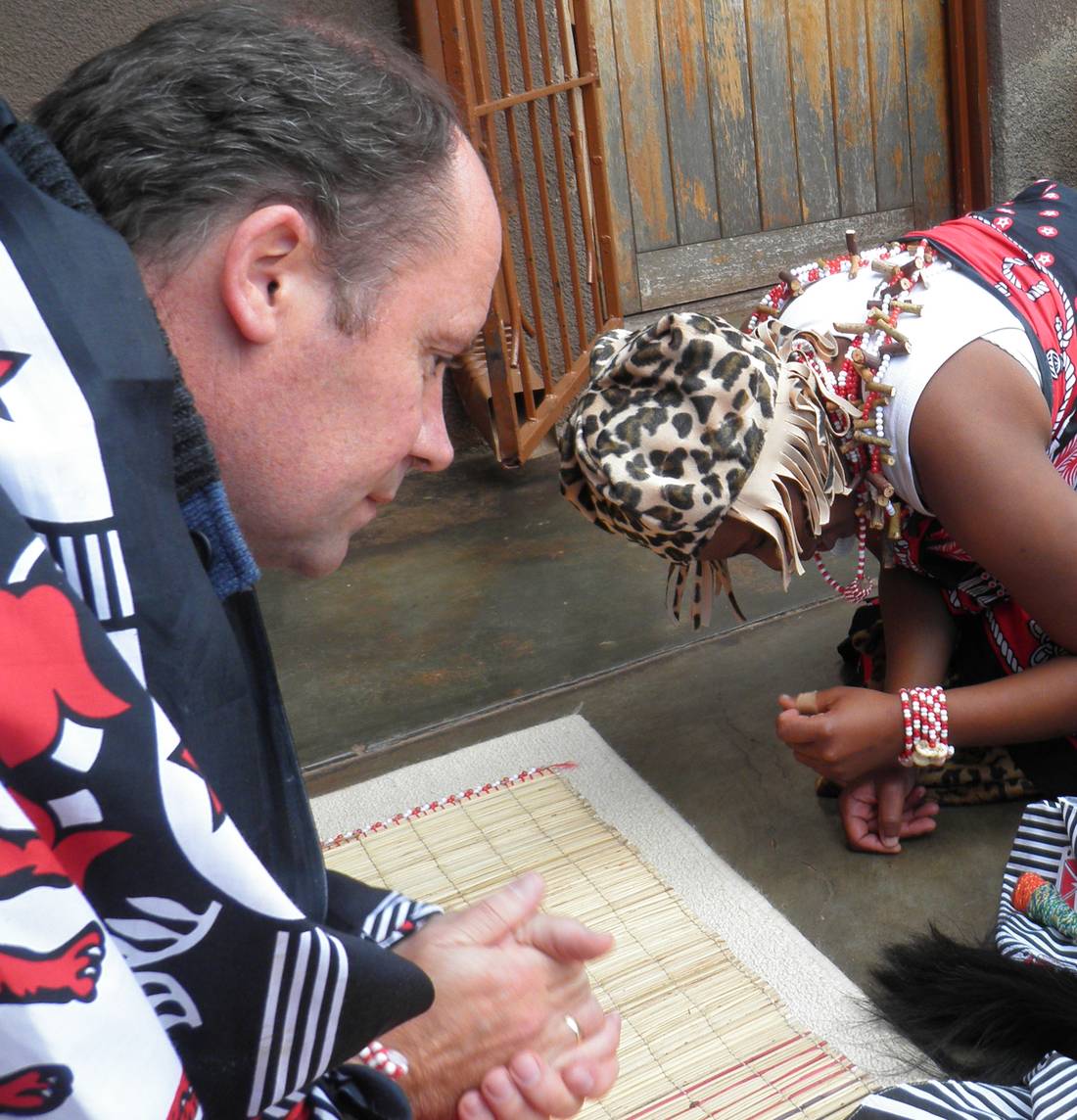
Throwing the bones to access the advice of ancestors is an alternative practice to the exhausting ritual of possession by the ancestor. In a typical session, a patient will visit the sangoma and the sangoma must determine what the affliction is or the reason the patient has come to them for help. Before the throwing of the bones; the healer should first ask the name and surname of the patient; the healer then calls the ancestors by names, starting with his/her initiators’ names, then his\hers then followed by the patient’s ancestors’ names. The patient or diviner throws bones on the floor, which may include animal vertebrae, dominoes, dice, coins, shells and stones, each with a specific significance to human life. For example, a hyena bone signifies a thief and will provide information about stolen objects. The sangoma or the patient throws the bones but the ancestors control how they lie. The sangoma then interprets this metaphor in relation to the patient’s afflictions, what the ancestors of the patient require, and how to resolve the disharmony. In the same way, sangomas will interpret metaphors present in dreams, either their own or their patients.
When the diviner comes to an acceptable understanding of the problem and the patient agrees, the diviner then needs to again throw the bones to ask the ancestors if he/she could help the patient. Depending on the feedback from the bones he/she will instruct the patient on a course of medicine which may include the use of ngoma, referral to a herbalist, inyanga (if the sangoma does not have the knowledge themselves), or recommend a Western medicine regimen.
Request an appointment
Not sure which of these is right for you? Tell me what you would like help with and I will point you in the right direction.